Description
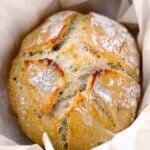
This Dutch Oven No Knead Bread recipe comes out perfectly crusty in under 3 hours. It’s an easy way to make homemade artisan bread with only 5 minutes of prep!
Ingredients
- 1 1/2 cups warm water, about 100°F
- 1 packet yeast, active dry, instant, or quick rise (2.25 teaspoons)
- 1 1/2 teaspoons fine grain salt
- 3 1/4 cups all-purpose flour or bread flour, plus more for dusting
Instructions
- In a large bowl or container, mix the warm water, yeast, and salt until the yeast and salt are fully or almost dissolved.
- Add the flour all at once and stir until a sticky dough forms. Mix just until everything is uniformly wet. If the dough seems too wet, add 1–2 tablespoons more flour at a time. If it seems too dry, add a little more water.
- Cover the bowl with a kitchen towel or place the container lid on ajar. Let the dough rise for 2–3 hours in a somewhat warm place, until it has doubled in volume.
- After the dough has doubled, either bake it immediately or refrigerate it for later use.
- 30 minutes to 1 hour before baking, preheat the oven to 450°F. Place the Dutch oven inside with the lid on while the oven preheats. Once the oven reaches 450°F, continue heating for another 20 minutes.
- Scrape the dough onto a piece of parchment paper dusted with flour. Use a silicone spatula to fold the edges of the dough up and over itself to form a loaf shape.
- Use the edges of the parchment paper to flip the loaf so the floured side is on top and center it on the parchment. Optionally, use a very sharp knife or clean razor blade to cut a few 1/2-inch-deep slits across the top.
- Carefully remove the preheated Dutch oven and take off the lid. Grab the parchment paper by the sides and place the loaf inside the Dutch oven.
- Place the lid back on, making sure the parchment is tucked inside. Bake on the center rack for 35 minutes at 450°F, or 40 minutes if the dough was cold from the refrigerator.
- Remove the lid and bake for another 5–10 minutes, until the bread is golden brown. Remove the loaf from the Dutch oven and place it on a wire rack or cutting board. Allow it to cool for at least 10 minutes, preferably 30 minutes to 1 hour, before slicing.
Notes
- The recipe now uses 1 1/2 teaspoons salt, which is the same amount as the previously listed 1/2 tablespoon.
- If the dough is too wet or dry, adjust it with small amounts of flour or water depending on the consistency.
- To make two smaller loaves, divide the dough in half and bake each for about 20–25 minutes covered before uncovering and browning.
- Fine sea salt, Himalayan salt, or other fine-grain salts can be used. Kosher or coarse sea salt can also be used; use about 2 teaspoons.
- Iodized salt can be used if necessary, but it may impart a slightly bitter taste and can potentially slow yeast growth.
- Allow the bread to cool longer before slicing to avoid a gummy or seemingly undercooked interior.
- If the bottom crust becomes too hard, place a baking sheet on the bottom rack to help divert some heat from the Dutch oven.
- Some enameled cast iron Dutch ovens should not be preheated empty. If concerned, place the dough into a cold Dutch oven and bake for 5–10 minutes longer covered.
- For refrigerated dough, leave the container slightly open at first so gases can escape. The dough can be refrigerated for up to 7 days and develops more flavor over time.
- Cold dough is easier to handle. Refrigerate it for about 30 minutes after rising if desired.
- If baking dough directly from the refrigerator, bake covered for 40–45 minutes instead of 35 minutes.
- If you don’t have a Dutch oven, bake the bread on a baking sheet or in a cast iron skillet. Place an oven-safe dish with water on the lower rack to create steam.
- Freeze baked bread after it has completely cooled. Slice it first and store it in a zip-top bag, or freeze a whole or half loaf tightly wrapped.
- A 5.5-quart oval or 6-quart round Dutch oven works well, but slightly smaller or larger Dutch ovens can also be used.
- Crumpling the parchment paper before using it helps it fit the shape of the Dutch oven.
- If the bread sticks to parchment, use a higher-quality parchment paper or lightly brush or spray the parchment with oil.
- Use parchment paper rated for high temperatures, preferably up to 450°F when baking at this temperature.
- Brush away excess flour from the outside of the loaf before baking or lightly spritz the loaf with water to encourage crust blisters.
- For dry dough, add a little more water until the dough becomes looser and sticky.
- At high altitude, adding about 1 tablespoon more water and keeping the towel damp during rising may help.
- Feel free to add ingredients such as herbs, roasted garlic, or Parmesan cheese before the dough rises.
- If the dough does not rise, check that the yeast is fresh and that the water is not too hot. To test yeast, mix it with warm water and a little sugar or honey and wait 5–10 minutes for it to become foamy.
- Prep Time: 5 minutes
- Cook Time: 40 minutes
- Category: Bread
- Method: Oven
- Cuisine: American