
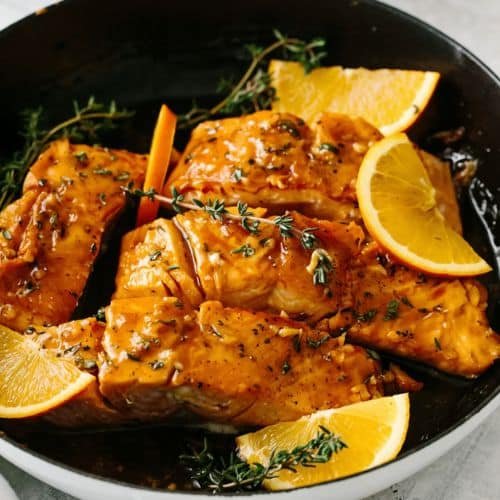
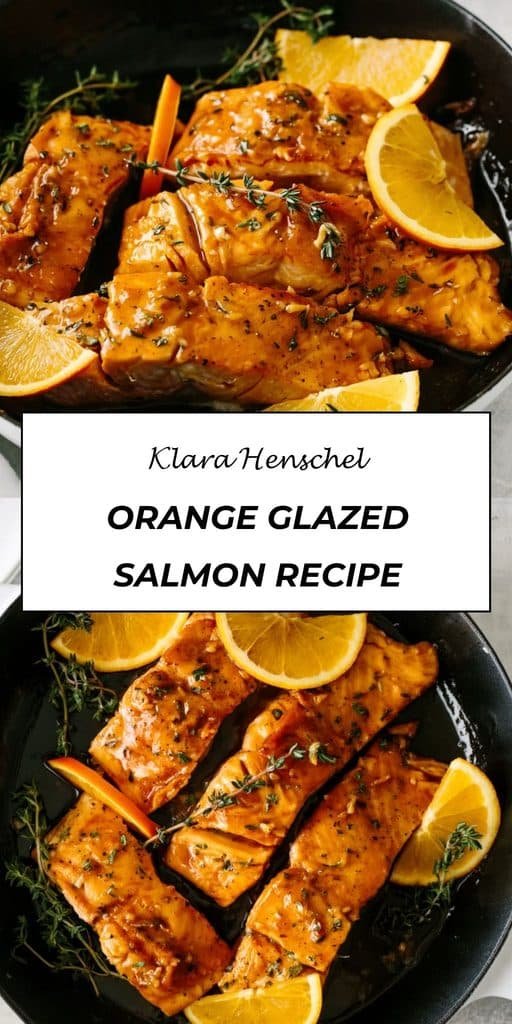
Orange Glazed Salmon is a fresh, flavorful dinner that combines tender, pan-seared salmon with a sweet and tangy orange glaze. Made with fresh orange juice, honey, garlic, tamari, and thyme, this easy salmon recipe delivers a delicious balance of citrusy sweetness and savory flavor in every bite.
Ready in just 25 minutes, it’s a wonderful option for busy weeknights when you want something satisfying without spending hours in the kitchen. Serve it with fluffy rice, roasted vegetables, or a crisp green salad for a simple meal that feels special enough for guests but easy enough for any day of the week.
Why You’ll Love This Recipe
- Ready in 25 minutes: With just five minutes of prep and 20 minutes of cooking time, dinner comes together quickly.
- Sweet and savory flavor: Fresh orange juice, honey, garlic, and tamari create a glossy, flavorful glaze.
- Tender, flaky salmon: Pan-searing gives the salmon a beautifully cooked exterior while keeping the inside moist.
- Simple ingredients: You only need a handful of everyday ingredients and a few pantry staples.
- Perfect for weeknights: Pair it with your favorite sides for an easy, balanced dinner.
Ingredients You’ll Need
- Avocado oil (2 tablespoons): Helps the salmon cook evenly and prevents sticking when the pan is properly heated.
- Salmon fillets (4, 6 ounces each): Alaskan sockeye or coho salmon are recommended for this recipe. Choose fillets of similar thickness so they cook at roughly the same rate.
- Orange (1, juiced): Fresh orange juice gives the glaze its bright citrus flavor.
- Garlic (2 cloves, minced): Adds savory depth that balances the sweetness of the orange and honey.
- Honey (2 tablespoons): Sweetens the glaze and helps create a glossy finish.
- Tamari (2 tablespoons): Adds a rich, savory flavor. Use a gluten-free tamari if needed, and check the label to confirm.
- Fresh thyme (1 teaspoon, finely chopped): Brings a subtle herbal note that complements the citrus.
- Salt and pepper: Season the salmon to taste.
- Arrowroot flour (½ teaspoon): Helps thicken the orange glaze without making it heavy.
- Water (1 teaspoon): Combines with the arrowroot flour to create a smooth slurry.
Equipment Needed
- Large skillet, preferably seasoned cast iron
- Cutting board and knife
- Citrus juicer or fork
- Small bowl for the arrowroot slurry
- Whisk
- Paper towels
- Spatula or fish turner
How to Make Orange Glazed Salmon
Step 1: Prepare and Season the Salmon
Pat the salmon fillets dry with paper towels. Season both sides with salt and pepper.
Drying the salmon helps it develop a better sear in the pan.
Step 2: Sear the Salmon
Heat the avocado oil in a large skillet over medium-high heat. Add the salmon fillets and cook for approximately 3–4 minutes per side, adjusting the timing as needed for their thickness.
Once the salmon is cooked, transfer the fillets to a plate and set aside while you prepare the glaze.
Step 3: Make the Arrowroot Slurry
While the salmon cooks, stir the arrowroot flour and water together in a small bowl until smooth. Set it aside.
Mixing the arrowroot with water before adding it to the pan helps prevent lumps from forming in the glaze.
Step 4: Prepare the Orange Glaze
Reduce the heat to medium-low. Add the minced garlic to the same skillet and sauté for about 30 seconds, stirring so it doesn’t burn.
Pour in the fresh orange juice, honey, tamari, and chopped thyme. Add the arrowroot slurry and whisk everything together for 1–2 minutes, or until the glaze begins to thicken.
Keep the heat moderate to prevent the garlic and honey from scorching.
Step 5: Coat the Salmon and Serve
Return the salmon fillets to the skillet. Spoon the orange glaze over each piece, allowing the sauce to coat the surface.
Serve immediately while the salmon is warm and the glaze is glossy. Remember that the sauce will continue to thicken slightly as it cools.
Tips for Success
- Use a well-seasoned skillet. A seasoned cast-iron pan is recommended to help prevent the salmon from sticking.
- Pat the salmon dry. Removing excess moisture encourages better browning.
- Don’t overcook the fish. Salmon cooks quickly, and thinner fillets may need less time than thicker ones. For food safety, cook fish to an internal temperature of 145°F (63°C), measured at the thickest part.
- Keep an eye on the garlic. Sauté it for only about 30 seconds before adding the liquid ingredients to avoid a bitter, burnt flavor.
- Whisk the glaze continuously. Stirring helps distribute the arrowroot slurry evenly and encourages a smooth, lump-free sauce.
- Allow for carryover thickening. The glaze will thicken further as it cools, so remove it from the heat once it reaches a slightly thickened consistency.
- Use fresh orange juice. Freshly squeezed juice gives the glaze a bright, natural citrus flavor.
Recipe Variations
- Add a little heat: Sprinkle in a pinch of red pepper flakes for a sweet-and-spicy glaze.
- Try a lemon-orange blend: Replace part of the orange juice with fresh lemon juice for a sharper citrus flavor.
- Use another fresh herb: Finely chopped parsley can be used as a finishing garnish if you don’t have thyme.
- Make it gluten-free: Tamari is often available in gluten-free versions. Check the product label to ensure the one you use meets your dietary needs.
- Adjust the sweetness: If you prefer a less sweet glaze, start with a little less honey and adjust to taste.
What to Serve With Orange Glazed Salmon
The citrusy glaze pairs well with simple sides that soak up the sauce and balance the richness of the salmon.
- Steamed rice: White or brown rice makes an easy base for the orange glaze.
- Roasted broccoli: Its lightly crisp edges and savory flavor complement the sweet citrus sauce.
- Garlic green beans: A quick vegetable side that keeps the meal fresh and simple.
- Roasted potatoes: Crispy potatoes add a satisfying contrast to the tender salmon.
- Quinoa: A hearty alternative to rice that works well with the savory glaze.
- Fresh green salad: Mixed greens, cucumber, and a light vinaigrette provide a refreshing contrast.
Storage and Reheating
Refrigeration: Let the salmon cool, then transfer it to an airtight container and refrigerate promptly. For food safety, use cooked salmon within three to four days.
Reheating: Warm the salmon gently in a covered skillet over low heat with a small splash of water, if needed, to loosen the glaze. Avoid high heat, which can dry out the fish. You can also reheat it in the microwave in short intervals until warmed through.
Freezing: Cooked salmon can be frozen in an airtight, freezer-safe container, although its texture may change slightly after thawing. For the best quality, use within two to three months and thaw overnight in the refrigerator before reheating.
Frequently Asked Questions
Can I use frozen salmon?
Yes. Thaw the salmon completely in the refrigerator before cooking, then pat it dry thoroughly. This helps the fillets sear properly and cook more evenly.
Can I use bottled orange juice?
Freshly squeezed orange juice is recommended for its bright flavor, but bottled orange juice can work in a pinch. Choose an unsweetened variety if possible so the glaze doesn’t become overly sweet.
How do I know when the salmon is cooked?
The salmon should be opaque and flake easily with a fork. For food safety, the thickest part should reach 145°F (63°C). Cooking time varies depending on the thickness of the fillets.
Why isn’t my orange glaze thickening?
Make sure the arrowroot flour is mixed with water before being added to the skillet. Whisk the sauce over medium-low heat for another short interval if needed. Keep in mind that the glaze will thicken more as it cools.
Can I make the glaze ahead of time?
You can prepare the orange juice, honey, tamari, and thyme mixture ahead of time and refrigerate it until needed. For the best texture, prepare and add the arrowroot slurry when you’re ready to cook the glaze.
What can I use instead of tamari?
Soy sauce can be used as an alternative, though the flavor and saltiness may differ. If you need a gluten-free dish, check the label carefully because many conventional soy sauces contain wheat.
Can I bake the salmon instead of pan-searing it?
This recipe is designed for pan-searing, which gives you a flavorful surface and lets you prepare the glaze in the same skillet. Baking is possible, but the cooking time and texture will differ, and the glaze should be prepared separately or added near the end.
Nutrition Information
The following nutrition estimates are for one serving, based on four servings per recipe.
- Calories: 361 kcal
- Carbohydrates: 14 g
- Protein: 35 g
- Fat: 18 g
- Saturated Fat: 2 g
- Cholesterol: 94 mg
- Sodium: 578 mg
- Potassium: 926 mg
- Fiber: 1 g
- Sugar: 12 g
- Vitamin A: 166 IU
- Vitamin C: 19 mg
- Calcium: 41 mg
- Iron: 2 mg
Nutrition information is an estimate and may vary depending on the ingredients and brands used.
Final Thoughts
Orange Glazed Salmon is a simple way to bring bright citrus flavor and a touch of sweetness to your dinner table. The combination of fresh orange juice, honey, garlic, tamari, and thyme creates a glossy glaze that complements the tender salmon without requiring complicated techniques.
With just 25 minutes from start to finish, this recipe is ideal for busy evenings, yet flavorful enough to serve for a relaxed dinner with friends or family. Pair it with rice and your favorite vegetables, spoon the extra glaze over the top, and enjoy a fresh, satisfying meal.
Print
Orange Glazed Salmon
- Total Time: 25 minutes
- Yield: 4 servings
Description
Orange Glazed Salmon is a quick, healthy dinner featuring tender salmon fillets coated in a sweet and citrusy orange glaze with garlic, honey, tamari, and fresh thyme. Ready in just 25 minutes, this flavorful recipe is perfect for busy weeknights.
Ingredients
- 2 tablespoons avocado oil
- 4 salmon fillets (6 ounces each), preferably Alaskan sockeye or coho
- 1 orange, juiced
- 2 cloves garlic, minced
- 2 tablespoons honey
- 2 tablespoons tamari
- 1 teaspoon fresh thyme, finely chopped
- Salt and black pepper, to taste
- 1/2 teaspoon arrowroot flour
- 1 teaspoon water
Instructions
- Pat the salmon fillets dry with paper towels. Season both sides with salt and black pepper.
- Heat the avocado oil in a skillet over medium-high heat. Add the salmon fillets and cook for 3–4 minutes per side, or until cooked to your preferred doneness.
- While the salmon cooks, mix the arrowroot flour and water in a small bowl to make a smooth slurry. Set aside.
- Transfer the cooked salmon to a plate.
- Reduce the heat to medium-low. Add the minced garlic to the skillet and sauté for about 30 seconds, until fragrant.
- Add the orange juice, honey, tamari, chopped thyme, and arrowroot slurry. Whisk continuously for 1–2 minutes, until the glaze begins to thicken.
- Return the salmon to the skillet and spoon the orange glaze over each fillet until coated.
- Serve immediately with your favorite vegetables, rice, or another preferred side.
Notes
- A well-seasoned cast-iron skillet helps prevent the salmon from sticking.
- The orange glaze will continue to thicken as it cools. Avoid cooking it for too long if it is already at your desired consistency.
- Use tamari for a gluten-free option, and check that all other ingredients are certified gluten-free if needed.
- Adjust the salt and pepper to taste, keeping in mind that tamari adds saltiness to the glaze.
- Prep Time: 5 minutes
- Cook Time: 20 minutes
- Category: Main Course, Dinner
- Method: Stovetop
- Cuisine: American