
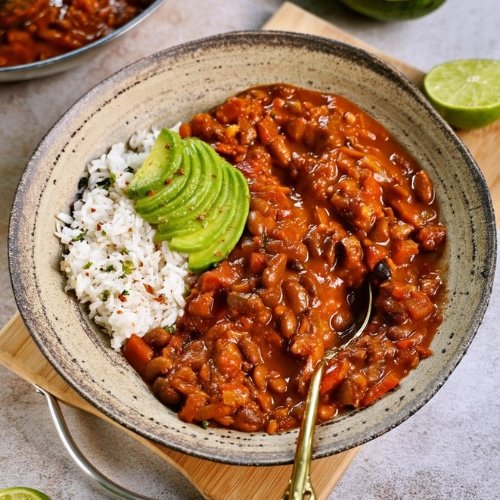
There’s nothing quite like a big bowl of homemade chili when you’re craving something warm, hearty, and comforting. This Vegan Chili Recipe is packed with tender beans, fresh vegetables, juicy tomatoes, and a delicious blend of smoky, savory spices. It’s thick, satisfying, and full of flavor without needing any meat or dairy.
The best part? Everything comes together in one pot, making cleanup wonderfully simple. With just 15 minutes of prep and about 30 minutes of cooking time, you can have a filling plant-based dinner ready in around 45 minutes.
Made with kidney beans, black beans, pinto beans, or whatever beans you have on hand, this easy vegan chili is also incredibly flexible. Adjust the fresh chili peppers to your preferred heat level, serve it with rice or warm flatbread, and finish with fresh cilantro or parsley for a cozy meal everyone can enjoy.
Why You’ll Love This Recipe
- Hearty and filling: A generous amount of beans provides plant-based protein and fiber, making every bowl satisfying.
- Made in one pot: Everything cooks together in a single pot, so there’s less washing up after dinner.
- Easy everyday ingredients: Beans, tomatoes, peppers, carrots, garlic, and pantry spices create plenty of flavor without complicated ingredients.
- Customizable heat: Use one chili pepper for a milder kick or add two if you enjoy a spicier bowl.
- Naturally vegan: This comforting chili is completely plant-based and contains no dairy or meat.
- Great for meal prep: The flavors develop beautifully as the chili rests, making leftovers especially delicious.
Ingredients You’ll Need
- Onion: One medium chopped onion creates a savory foundation and adds natural sweetness as it cooks.
- Garlic: Four cloves of finely minced garlic bring a warm, aromatic flavor to the chili.
- Green bell pepper: Adds freshness, a little crunch, and classic chili flavor.
- Carrot: One grated carrot adds natural sweetness and blends nicely into the tomato-based sauce.
- Fresh tomatoes: Five to six medium tomatoes provide the juicy tomato base. You can also use one 20-ounce can of diced tomatoes.
- Tomato paste: Five tablespoons give the chili a concentrated tomato flavor and help create a rich, thick sauce.
- Water or vegetable broth: Provides the liquid needed to simmer the ingredients. Vegetable broth adds extra savory flavor, while water keeps things simple.
- Cooked beans: Four cups of cooked beans make this chili hearty and protein-rich. Kidney beans, black beans, pinto beans, and white beans all work well.
- Coconut sugar: Two teaspoons balance the acidity of the tomatoes. Brown sugar or maple syrup can also be used.
- Ground cumin: Adds warm, earthy flavor that gives the chili its familiar character.
- Onion powder: Deepens the savory onion flavor.
- Garlic powder: Adds another layer of garlic flavor alongside the fresh cloves.
- Salt: Brings out the flavors of the vegetables, beans, and spices. Use less if your vegetable broth is already salty.
- Black pepper: Adds a gentle peppery warmth.
- Smoked paprika: Gives the chili a subtle smoky note.
- Cayenne pepper: Adds extra heat and complements the fresh chili peppers.
- Fresh red chili peppers: One or two chopped hot red chilies add freshness and adjustable heat. Remove the seeds for a milder result.
- Oil of choice: A little oil helps soften the onion and pepper at the beginning of cooking.
How to Make Vegan Chili
Step 1: Prepare the Vegetables
Start by chopping the onion and green bell pepper. Finely mince the garlic, grate the carrot, and dice the fresh tomatoes if you’re using them instead of canned tomatoes.
Finely chop the fresh red chili peppers, adjusting the amount to your preferred spice level. For a milder chili, remove the seeds before chopping.
Having everything ready before you start cooking makes the process much easier.
Step 2: Sauté the Onion and Green Pepper
Heat two teaspoons of oil in a large pot or Dutch oven over medium heat.
Add the chopped onion and green bell pepper. Sauté for about five minutes, stirring occasionally, until the vegetables begin to soften.
Add the minced garlic and cook for another one to two minutes. Stir regularly so the garlic becomes fragrant without browning too much.
Step 3: Add the Tomatoes
Stir in the diced fresh tomatoes and cook for another three to five minutes.
The tomatoes will begin to soften and release their juices, creating a flavorful base for the chili.
If you’re using canned diced tomatoes, add them at this stage just as you would the fresh tomatoes.
Step 4: Add the Beans, Liquid, and Seasonings
Add the cooked beans, tomato paste, water or vegetable broth, grated carrot, coconut sugar, cumin, onion powder, garlic powder, salt, black pepper, smoked paprika, cayenne pepper, and chopped fresh chili peppers.
Stir everything thoroughly until the tomato paste and seasonings are evenly distributed throughout the mixture.
The pot should already smell wonderfully savory and aromatic.
Step 5: Simmer Until Thick and Flavorful
Increase the heat and bring the chili to a gentle boil. Once bubbling, reduce the heat and let it simmer for approximately 30 minutes.
Stir occasionally to prevent the beans and tomato mixture from sticking to the bottom of the pot.
If the chili becomes too thick before the flavors have had time to develop, add a little more water or vegetable broth. If you prefer a thicker consistency, allow it to simmer a little longer.
Step 6: Blend Part of the Chili for a Creamier Texture
This optional step makes a big difference if you enjoy thick, hearty chili.
Transfer approximately 1 to 1½ cups of the chili into a separate container or pot. Blend until smooth using an immersion blender or a regular blender.
If using a regular blender, allow the mixture to cool slightly and follow the manufacturer’s instructions for blending hot liquids safely.
Pour the blended portion back into the main pot and stir well. This creates a thicker, creamier texture while keeping plenty of whole beans and vegetables in every spoonful.
Step 7: Taste and Adjust the Seasoning
Give the chili a final taste. Add more salt, black pepper, or cayenne if needed.
If it’s too spicy, you can soften the heat with a little more tomato or broth. If the tomatoes taste particularly acidic, a small additional amount of sweetener can help balance the flavor.
Step 8: Serve and Enjoy
Ladle the hot vegan chili into bowls and garnish with freshly chopped cilantro or parsley.
Serve it with rice, pasta, baked potatoes, or warm flatbread for a satisfying plant-based dinner.

Tips for Success
- Use a combination of beans: Mixing kidney beans, black beans, pinto beans, and white beans creates a variety of textures and makes every spoonful interesting.
- Don’t rush the vegetables: Give the onion and green pepper enough time to soften before adding the other ingredients. This builds a flavorful foundation.
- Adjust the chili heat: Fresh chili peppers vary in strength. Start with one pepper if you’re unsure, then add more next time if you’d like extra heat.
- Choose broth for more flavor: Vegetable broth adds savory depth, but water works perfectly well if that’s what you have available.
- Blend only part of the chili: This is the easiest way to get a thick, rich consistency without losing the texture of the beans.
- Add liquid gradually: Beans and tomato paste can make the chili quite thick. Add extra broth or water a little at a time until it reaches your preferred consistency.
- Taste before serving: The saltiness of canned beans and vegetable broth can vary, so adjust the seasoning at the end.
- Let it rest: If you have a few extra minutes, allow the chili to sit off the heat before serving. The flavors will have a little more time to come together.
Equipment Needed
You don’t need any special equipment to prepare this easy one-pot vegan chili. These basic kitchen tools are enough:
- Large pot or Dutch oven: Provides plenty of room for the vegetables, beans, and sauce to simmer together.
- Cutting board and sharp knife: For chopping the onion, pepper, tomatoes, garlic, and fresh chili.
- Grater: Makes it easy to grate the carrot.
- Wooden spoon: Useful for stirring the chili and scraping the bottom of the pot.
- Measuring cups and spoons: Help you measure the beans, liquid, and spices.
- Immersion blender: Optional, but useful for blending part of the chili to create a thicker texture.
Recipe Variations
1. Make It Extra Spicy
If you love spicy food, add an extra red chili pepper or increase the cayenne pepper slightly. You can also add a pinch of crushed red pepper flakes while the chili simmers.
2. Use Your Favorite Bean Combination
One of the best things about this recipe is how flexible it is. Use kidney beans for a firm, hearty texture, black beans for an earthy flavor, pinto beans for a creamy bite, or white beans for a milder taste. A mixture of all four is delicious.
3. Add More Vegetables
Make the chili even more colorful by adding diced zucchini, corn, celery, or mushrooms. Add firmer vegetables early enough to soften, and stir in quick-cooking vegetables toward the end.
4. Make It Smokier
If you enjoy a deeper smoky flavor, increase the smoked paprika slightly. You can also add a small amount of chipotle powder for a smoky, spicy twist.
5. Prepare a Low-Sodium Version
Use water or low-sodium vegetable broth and choose beans without added salt. Adjust the seasoning gradually as the chili cooks.
6. Make It Oil-Free
For an oil-free version, sauté the onion and green pepper in a splash of vegetable broth or water instead of oil. Add more liquid as needed to prevent sticking.
7. Add a Little Sweetness
If your tomatoes are particularly acidic, use brown sugar or maple syrup instead of coconut sugar. Start with the suggested amount and adjust to taste.
Serving Suggestions
This vegan chili is filling enough to enjoy on its own, but it’s even better with a simple side or a few toppings.
- Steamed rice: A classic pairing that soaks up the rich tomato sauce and makes the meal extra satisfying.
- Warm flatbread: Perfect for scooping up thick spoonfuls of chili.
- Baked potatoes: Spoon the chili over fluffy baked potatoes for a hearty and comforting dinner.
- Pasta: Serve it over your favorite pasta for a fun twist on traditional chili.
- Cornbread: A slightly sweet piece of cornbread pairs beautifully with the smoky, savory spices.
- Fresh salad: A crisp green salad with a light dressing adds freshness to the meal.
- Avocado slices: Creamy avocado makes a delicious topping and balances the heat.
- Fresh cilantro or parsley: A sprinkle of fresh herbs brightens up each bowl.
For an easy chili dinner, set out bowls of chopped herbs, avocado, sliced chili peppers, and your favorite vegan toppings so everyone can customize their own serving.
Frequently Asked Questions
Can I Use Canned Beans for Vegan Chili?
Absolutely! Canned beans are a convenient option and work perfectly in this recipe. Drain and rinse them before adding them to the pot. Since the recipe calls for four cups of cooked beans, measure the beans after draining.
What Are the Best Beans for Vegan Chili?
Kidney beans, black beans, pinto beans, and white beans are all excellent choices. You can use one type or combine several varieties. Mixing different beans gives the chili a nice range of textures and flavors.
How Do I Make Vegan Chili Thicker?
The easiest way is to blend about 1 to 1½ cups of the finished chili and stir it back into the pot. The blended beans and vegetables naturally thicken the sauce without needing flour or cornstarch. You can also simmer the chili uncovered for a little longer to reduce excess liquid.
Is This Vegan Chili Spicy?
The heat depends on how many fresh chili peppers you use and how hot they are. The recipe uses one to two red chili peppers, along with cayenne pepper. For a milder version, start with one pepper, remove its seeds, and reduce or omit the cayenne.
Can I Make Vegan Chili Ahead of Time?
Yes! This chili is a great make-ahead meal. Prepare it as directed, let it cool, and refrigerate it in an airtight container. The flavors often become even more developed after resting overnight. Reheat gently on the stovetop, adding a little water or vegetable broth if it has thickened.
Can I Freeze Vegan Chili?
Yes. Allow the chili to cool completely, then transfer it to freezer-safe containers or bags in individual portions. Freeze for up to 3 months for best quality. Thaw overnight in the refrigerator and reheat on the stovetop until hot throughout.
Final Thoughts
This Vegan Chili Recipe is everything a comforting homemade meal should be: hearty, flavorful, filling, and wonderfully easy to prepare. With a combination of beans, fresh vegetables, tomatoes, and warming spices, it delivers plenty of flavor without relying on meat or dairy.
The one-pot method makes it especially convenient for busy evenings, while the option to blend part of the chili gives it that thick, rich texture that makes every bowl satisfying. Serve it with rice, flatbread, or baked potatoes, and don’t forget the fresh cilantro or parsley on top.
Give this easy vegan chili a try, and let me know which beans and toppings you used in the comments. I’d love to hear how you made it your own!
Print
Vegan Chili Recipe
- Total Time: 45 minutes
- Yield: 4 servings
- Diet: Vegan
Description
This vegan chili is hearty, comforting, and packed with plant-based protein. Made with your choice of beans, fresh vegetables, tomatoes, and a cozy blend of spices, it all comes together in one pot for an easy and satisfying meal. With just 15 minutes of prep and a simple simmer, this flavorful chili is ready in 45 minutes.
Ingredients
- 1 medium onion, chopped
- 4 cloves garlic, finely minced
- 1 green pepper, chopped
- 1 medium carrot, grated
- 5–6 medium tomatoes (560 g), diced, or 1 (20 oz) can diced tomatoes
- 5 tablespoons tomato paste
- 2 cups (480 ml) water or vegetable broth
- 4 cups cooked beans, such as kidney beans, black beans, pinto beans, or white beans (or 1 cup of each)
- 2 teaspoons coconut sugar, brown sugar, or another sweetener such as maple syrup
- 1 teaspoon ground cumin
- 1 teaspoon onion powder
- 1 teaspoon garlic powder
- 3/4 teaspoon salt, or less if using vegetable broth
- 1/2 teaspoon black pepper
- 1/4 teaspoon smoked paprika
- 1/4 teaspoon cayenne pepper
- 1–2 hot red chili peppers, adjusted to taste
- 2 teaspoons oil of choice, for frying
Instructions
- Sauté the vegetables. Heat the oil in a large pot or pan over medium heat. Add the chopped onion and green pepper and sauté for about 5 minutes until softened. Add the minced garlic and cook for another 1–2 minutes, stirring occasionally.
- Add the tomatoes. Stir in the diced fresh tomatoes and cook for another 3–5 minutes, allowing them to soften and release their juices.
- Add the remaining ingredients. Mix in the tomato paste, water or vegetable broth, cooked beans, sweetener, cumin, onion powder, garlic powder, salt, black pepper, smoked paprika, cayenne pepper, and chopped hot chili peppers.
- Simmer the chili. Increase the heat until the mixture begins to simmer, then reduce the heat and cook for about 30 minutes, stirring occasionally. Add a little more water or vegetable broth if the chili becomes too thick.
- Blend for a thicker texture (optional). Transfer about 1 to 1 1/2 cups of chili to a separate pot or container. Blend until smooth using an immersion blender or regular blender. Return the blended mixture to the main pot and stir well.
- Serve. Taste and adjust the seasoning if needed. Serve warm with rice, pasta, potatoes, or flatbread. Garnish with fresh cilantro or parsley.
Notes
- Choose your favorite beans. Kidney beans, black beans, pinto beans, and white beans all work well. You can use one variety or combine several.
- Adjust the heat. Use one chili pepper for a milder result or two for extra heat. You can also reduce or omit the cayenne pepper.
- Control the consistency. Add extra water or vegetable broth if the chili gets too thick while simmering.
- Blend for a thicker chili. Blending a portion of the beans and vegetables creates a thicker, creamier texture without adding dairy.
- Serving ideas. Enjoy with rice, pasta, potatoes, or flatbread, and finish with fresh cilantro or parsley.
- Serving size. This recipe makes 4 servings. The nutrition information is calculated for one serving.
- Prep Time: 15 minutes
- Cook Time: 30 minutes
- Category: Main Dish, Dinner
- Method: Stovetop
- Cuisine: American