
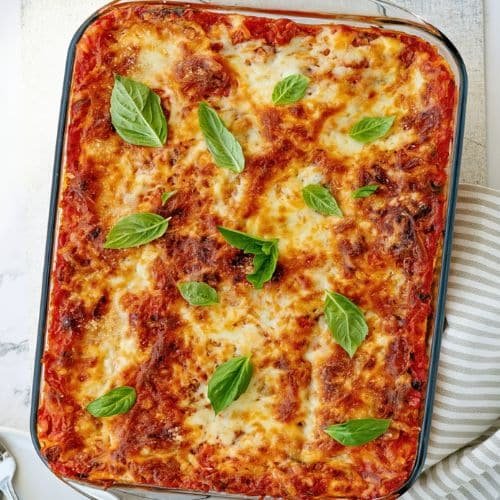
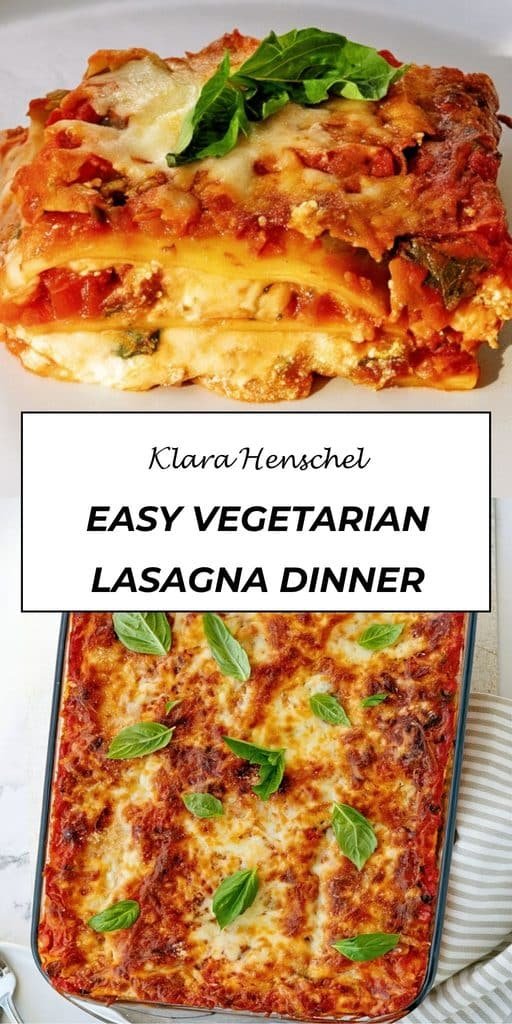
There’s nothing quite like a homemade Vegetarian Lasagna fresh from the oven, with layers of tender pasta, rich Italian marinara sauce, creamy ricotta, fresh basil, and plenty of melted mozzarella. Every bite is packed with comforting flavors, making this a satisfying meatless dinner that even meat lovers will enjoy.
This easy homemade Vegetarian Lasagna is perfect for family dinners, Sunday gatherings, holidays, or whenever you’re craving something hearty and delicious. The homemade marinara sauce is made with tomatoes, onions, carrots, celery, bell peppers, garlic, and aromatic herbs, creating a rich, chunky sauce that tastes even better after simmering.
What makes this recipe extra special is the ricotta mixture, which gets a refreshing touch from lemon zest and fresh basil. Combined with layers of mozzarella and Parmigiano-Reggiano, it creates a wonderfully creamy, cheesy lasagna with a golden, bubbly top.
Whether you’re looking for a comforting vegetarian dinner or a delicious make-ahead meal, this Vegetarian Lasagna recipe is one you’ll want to make again and again.
Why You’ll Love This Recipe
- Completely meatless: Packed with vegetables, cheese, and delicious Italian flavors, this lasagna is satisfying without meat.
- Homemade marinara sauce: Fresh vegetables, tomatoes, garlic, and herbs create a rich and flavorful sauce.
- Creamy and cheesy: Ricotta, mozzarella, and Parmigiano-Reggiano give every layer an irresistible texture.
- Perfect for sharing: This recipe makes 12 servings, making it ideal for family meals and gatherings.
- Great for meal prep: Prepare it ahead of time, refrigerate, and bake when you’re ready for dinner.
Ingredients
This homemade Vegetarian Lasagna uses simple ingredients that come together to create layers of incredible flavor. For the best results, use fresh herbs and good-quality cheese.
For the Homemade Marinara Sauce
- 1/3 cup extra virgin olive oil: Creates a flavorful base for sautéing the vegetables.
- 1 large yellow onion, finely chopped: Adds sweetness and depth to the marinara sauce.
- 1 large carrot, peeled and finely chopped or grated: Brings natural sweetness and balances the acidity of the tomatoes.
- 2 celery ribs, finely chopped or grated: Adds savory flavor and creates a classic Italian vegetable base.
- 1 medium red bell pepper, finely chopped: Contributes sweetness, color, and texture.
- 1 medium green bell pepper, finely chopped: Adds a slightly earthy flavor that balances the other vegetables.
- 1/2 teaspoon kosher salt: Enhances the flavor of the vegetables and sauce.
- 1/4 teaspoon freshly ground black pepper: Adds gentle warmth and seasoning.
- 1/4 teaspoon red pepper flakes: Gives the marinara a subtle kick of heat.
- 4 garlic cloves, minced: Adds aromatic, savory flavor.
- 2 tablespoons tomato paste: Deepens the tomato flavor and helps thicken the sauce.
- Two 28-ounce cans whole peeled tomatoes: Form the rich, chunky base of the homemade marinara.
- 1 bay leaf: Adds a subtle herbal aroma while the sauce simmers.
- 1 1/2 teaspoons dried oregano: Gives the sauce its classic Italian-inspired flavor.
- 2 teaspoons balsamic vinegar: Adds a touch of acidity and sweetness that balances the tomatoes.
- 1/2 cup fresh chopped basil: Brings freshness and a fragrant finish to the marinara.
For the Lasagna Assembly
- 12 dried lasagna noodles: Create the tender pasta layers. Use regular dried noodles rather than no-boil noodles.
- Extra virgin olive oil, for drizzling: Helps prevent the cooked noodles from sticking together.
- 2 cups (475g) full-fat ricotta cheese: Provides a creamy, mild, and slightly sweet filling.
- 1 cup finely grated Parmigiano-Reggiano, divided: Adds a rich, nutty, salty flavor throughout the lasagna and creates a golden topping.
- 1 teaspoon fresh lemon zest: Brightens the ricotta mixture and balances the richness of the cheese.
- 1/2 cup finely chopped fresh basil: Adds freshness and a lovely herbal flavor to the filling.
- 1 pound (450g) low-moisture freshly shredded mozzarella: Creates deliciously melted, stretchy, cheesy layers.
Important vegetarian note: Traditional Parmigiano-Reggiano is generally made using animal rennet. If you want this recipe to be strictly vegetarian, choose a Parmesan-style cheese made with vegetarian or microbial rennet.
How to Make Vegetarian Lasagna
This homemade Vegetarian Lasagna takes a little time to prepare, but the process is straightforward. Making the marinara sauce from scratch is worth the extra effort because it gives the finished dish incredible flavor.
Step 1: Prepare the Homemade Marinara Sauce
Heat the extra virgin olive oil in a large, heavy-bottomed pot over medium heat.
Add the chopped onion, carrot, celery, red bell pepper, and green bell pepper. Cook for approximately 10 minutes, stirring occasionally, until the vegetables become tender.
Add the kosher salt, black pepper, red pepper flakes, and minced garlic. Cook for another minute until fragrant.
Stir in the tomato paste and cook for about 2 minutes, stirring frequently. This helps deepen the tomato flavor.
Add the canned whole peeled tomatoes with their juices, bay leaf, dried oregano, and balsamic vinegar. Crush the tomatoes by hand or use an immersion blender for a slightly smoother consistency.
Bring the sauce to a gentle boil, then reduce the heat to low. Simmer uncovered for approximately 30 minutes, stirring occasionally, until the sauce thickens slightly.
Stir in the fresh chopped basil and simmer for another 5 minutes.
Taste and adjust the seasoning with additional salt or red pepper flakes if needed. Remove the bay leaf and set the marinara sauce aside to cool slightly.
Step 2: Cook the Lasagna Noodles
Bring a large pot of generously salted water to a rolling boil.
Add the dried lasagna noodles and stir a few times to prevent them from sticking together.
Cook the noodles for 1–2 minutes less than the package instructions for al dente pasta. They will continue cooking in the oven, so avoid making them too soft.
Drain the noodles in a colander and drizzle with a little extra virgin olive oil. Gently toss to coat and set aside.
Step 3: Make the Creamy Ricotta Filling
In a large mixing bowl, combine the ricotta cheese, 1/2 cup of the grated Parmigiano-Reggiano, fresh lemon zest, and chopped basil.
Stir until everything is evenly combined and creamy.
The lemon zest adds a lovely freshness that balances the richness of the ricotta and mozzarella. Set the mixture aside while you prepare the baking dish.
Step 4: Assemble the First Layer
Preheat your oven to 375°F (190°C).
Spread approximately one-quarter of the homemade marinara sauce across the bottom of a 9×13-inch baking dish.
Arrange the first layer of cooked lasagna noodles over the sauce, using approximately 3–4 noodles depending on their size. Tear the noodles if necessary to fit the dish.
Spread another quarter of the marinara sauce over the noodles.
Add half of the ricotta mixture and gently spread it into an even layer. Sprinkle approximately one-third of the shredded mozzarella over the ricotta.
Step 5: Add the Second Layer
Arrange another layer of lasagna noodles over the mozzarella.
Spread another quarter of the marinara sauce evenly across the noodles.
Add the remaining ricotta mixture and spread it gently to create an even layer.
Sprinkle another third of the shredded mozzarella over the ricotta.
Step 6: Finish the Lasagna Layers
Add the final layer of lasagna noodles over the cheese.
Spread the remaining marinara sauce across the top, making sure the noodles are covered.
Sprinkle the remaining mozzarella evenly over the sauce.
Finish with the remaining 1/2 cup of grated Parmigiano-Reggiano.
This final cheese layer will melt and turn beautifully golden as the lasagna bakes.
Step 7: Bake Until Golden and Bubbly
Place the baking dish on a large sheet pan to catch any sauce that may bubble over during baking.
Transfer to the preheated oven and bake for 40–45 minutes, or until the sauce is bubbling around the edges and the cheese on top is completely melted and golden brown.
If the top starts browning too quickly, loosely cover the dish with aluminum foil for the remaining baking time.
Step 8: Rest, Slice, and Serve
Remove the Vegetarian Lasagna from the oven and let it rest for at least 15–30 minutes before cutting.
This resting time allows the layers to settle, making it much easier to cut neat slices without the filling spilling out.
Slice into generous portions and serve warm with extra marinara sauce if desired.
Tips for Success
- Make the sauce from scratch: A homemade marinara sauce gives this vegetarian lasagna a richer flavor than most store-bought alternatives.
- Don’t overcook the noodles: Cook them slightly less than al dente so they don’t become mushy during baking.
- Use freshly shredded cheese: Freshly shredded mozzarella melts more smoothly than many pre-shredded varieties, which often contain anti-caking ingredients.
- Choose full-fat ricotta: It creates a creamier, richer filling that holds together beautifully.
- Chop the vegetables finely: Smaller vegetable pieces distribute more evenly throughout the marinara sauce and make layering easier.
- Don’t skip the lemon zest: It may seem like a small addition, but it brightens the ricotta mixture and balances the rich cheese.
- Let the lasagna rest: Give it at least 15 minutes before slicing so the layers can firm up.
- Reserve extra marinara sauce: Keep a little sauce aside to serve with individual portions, especially when reheating leftovers.
- Check your cheese labels: If you’re serving strict vegetarians, make sure your Parmesan-style cheese uses vegetarian-friendly rennet.
Equipment Needed
You’ll need a few basic kitchen tools to prepare this delicious homemade lasagna.
- 9×13-inch baking dish: Provides enough space for the three layers of pasta and filling.
- Large heavy-bottomed pot: Perfect for preparing and simmering the marinara sauce.
- Large pot: Used for boiling the lasagna noodles.
- Colander: Makes draining the cooked noodles easy.
- Large mixing bowl: For preparing the creamy ricotta filling.
- Wooden spoon: Helps stir the vegetables and marinara sauce.
- Whisk or spatula: Useful for combining the ricotta ingredients.
- Chef’s knife and cutting board: For chopping the vegetables and fresh basil.
- Box grater: For shredding the mozzarella and finely grating the Parmesan.
- Large sheet pan: Placed beneath the baking dish to catch any sauce that bubbles over.
Recipe Variations
One of the best things about Vegetarian Lasagna is how easy it is to customize. Here are a few delicious ways to change the recipe while keeping its comforting Italian-inspired flavors.
1. Vegetable-Packed Lasagna
Add extra vegetables to the marinara sauce or ricotta layers. Sautéed zucchini, mushrooms, spinach, and eggplant are excellent additions. Cook watery vegetables before assembling to avoid excess moisture in the finished lasagna.
2. Spinach and Ricotta Lasagna
For a classic vegetarian combination, add 2 cups of chopped fresh spinach to the ricotta mixture. If using frozen spinach, thaw it completely and squeeze out excess moisture before mixing.
3. Spicy Vegetarian Lasagna
If you enjoy a little heat, increase the red pepper flakes in the marinara sauce. You can also add finely chopped fresh chili peppers or a pinch of cayenne pepper for extra warmth.
4. Mushroom Marinara Lasagna
Add sliced cremini or button mushrooms to the vegetable mixture when sautéing the onions, carrots, and celery. Cook until the mushrooms release their moisture and become golden. They add a delicious earthy flavor that makes the lasagna extra hearty.
5. Gluten-Free Vegetarian Lasagna
Replace the regular lasagna noodles with your favorite gluten-free lasagna noodles. Follow the package instructions carefully, as cooking times and textures can vary between brands. Also check that your other ingredients are certified gluten-free if needed.
6. Extra Cheesy Lasagna
For an even richer version, add a layer of provolone or fontina cheese between the mozzarella and ricotta. These cheeses melt beautifully and add another layer of savory flavor.
Serving Suggestions
This Vegetarian Lasagna is hearty enough to serve as the main course, but pairing it with a few simple sides makes the meal even more enjoyable.
Here are some delicious serving ideas:
- Garlic bread: Warm, crispy garlic bread is perfect for soaking up the homemade marinara sauce.
- Fresh Italian salad: Toss mixed greens, cherry tomatoes, cucumber, and red onion with a light balsamic vinaigrette.
- Roasted vegetables: Serve with roasted zucchini, broccoli, asparagus, or carrots for a colorful meal.
- Caprese salad: Fresh tomatoes, mozzarella, basil, and a drizzle of balsamic glaze complement the Italian flavors.
- Sautéed green beans: Lightly seasoned green beans provide a fresh contrast to the rich cheese layers.
- Bruschetta: Toasted bread topped with fresh tomatoes, basil, garlic, and olive oil makes a delicious starter.
For a beautiful presentation, serve each slice with a spoonful of extra marinara sauce, a sprinkle of fresh basil, and a little freshly grated vegetarian Parmesan.
Frequently Asked Questions
Can I make Vegetarian Lasagna ahead of time?
Yes! This recipe is excellent for preparing ahead. You can make the marinara sauce and ricotta mixture in advance, then assemble the lasagna and refrigerate it until you’re ready to bake. For the best texture, assemble it no more than 24 hours ahead and keep it tightly covered in the refrigerator.
Can I use no-boil lasagna noodles?
This recipe is designed for regular dried lasagna noodles that are boiled before assembling. No-boil noodles absorb moisture differently, so substituting them may affect the final texture. If you want to use them, follow the package instructions and ensure there’s enough sauce to hydrate them properly.
How do I keep vegetarian lasagna from becoming watery?
The key is to simmer the marinara sauce until it thickens slightly and avoid adding vegetables with excess moisture. If you include zucchini, mushrooms, or spinach, cook or drain them before adding them to the layers. Also, allow the lasagna to rest before slicing.
Can I freeze homemade Vegetarian Lasagna?
Absolutely! You can freeze the assembled, unbaked lasagna or freeze baked leftovers. Wrap everything tightly in freezer-safe packaging and freeze for up to 2–3 months for best quality. Thaw overnight in the refrigerator before reheating or baking.
How long does Vegetarian Lasagna last in the refrigerator?
Store leftover lasagna in an airtight container or cover the baking dish tightly. It will keep in the refrigerator for approximately 3–4 days. Reheat individual portions in the microwave or oven until heated through.
What can I use instead of ricotta cheese?
Cottage cheese is a great substitute for ricotta. For a smoother consistency, blend it briefly before mixing it with the lemon zest, basil, and Parmesan-style cheese. You can also use a vegetarian-friendly mascarpone and cottage cheese combination for a richer filling.
Is this Vegetarian Lasagna suitable for strict vegetarians?
The recipe is meat-free, but traditional Parmigiano-Reggiano is typically made with animal rennet. For a strictly vegetarian version, choose a Parmesan-style cheese labeled as vegetarian or made with microbial or vegetable rennet. Check the mozzarella and other cheese labels as well.
Final Thoughts
This Vegetarian Lasagna is everything a comforting homemade dinner should be: hearty, cheesy, flavorful, and filled with delicious layers. The rich homemade marinara sauce, creamy lemon-basil ricotta, tender pasta, and golden mozzarella topping create a combination that’s hard to resist.
It’s a wonderful recipe to prepare for family dinners, special occasions, or weekend gatherings when you want to serve something homemade and satisfying. Plus, the generous 12-serving yield makes it perfect for feeding a crowd or saving leftovers for another delicious meal.
Make this easy Vegetarian Lasagna your own by adding your favorite vegetables, adjusting the seasonings, or experimenting with different cheeses. If you try it, share your experience in the comments and let us know what delicious twists you added!
Print
Vegetarian Lasagna
- Total Time: 1 hour 50 minutes
- Yield: 12 servings
- Diet: Vegetarian
Description
This is the best vegetarian lasagna recipe, filled with layers of tender lasagna noodles, chunky homemade Italian marinara sauce, creamy ricotta cheese with fresh lemon zest, fragrant basil, mozzarella, and Parmigiano-Reggiano. Baked until hot and bubbly with a beautifully golden-brown cheese topping, it’s the ultimate comforting family dinner.
Ingredients
- 1/3 cup extra virgin olive oil
- 1 large yellow onion, finely chopped
- 1 large carrot, peeled and finely chopped or grated
- 2 celery ribs, finely chopped or grated
- 1 medium red bell pepper, finely chopped
- 1 medium green bell pepper, finely chopped
- 1/2 teaspoon kosher salt
- 1/4 teaspoon freshly ground black pepper
- 1/4 teaspoon red pepper flakes
- 4 garlic cloves, minced
- 2 tablespoons tomato paste
- 2 (28-ounce) cans whole peeled tomatoes, crushed by hand or with an immersion blender
- 1 bay leaf
- 1 1/2 teaspoons dried oregano
- 2 teaspoons balsamic vinegar
- 1/2 cup fresh chopped basil
- 12 dried lasagna noodles (not no-boil)
- Extra virgin olive oil, for drizzling
- 2 cups (475g) full-fat ricotta cheese
- 1 cup finely grated Parmigiano-Reggiano, divided
- 1 teaspoon fresh lemon zest
- 1/2 cup finely chopped fresh basil
- 1 pound (450g) low-moisture mozzarella cheese, freshly shredded
Instructions
- In a large heavy-bottomed pot, heat the olive oil over medium heat. Add the chopped onion, carrot, celery, red bell pepper, and green bell pepper. Cook, stirring occasionally, for about 10 minutes until the vegetables are tender.
- Add the kosher salt, black pepper, red pepper flakes, and minced garlic. Cook for 1 minute until fragrant. Stir in the tomato paste and cook for another 2 minutes.
- Add the canned tomatoes with their juices, bay leaf, dried oregano, and balsamic vinegar. Bring to a gentle boil, then reduce the heat to low. Simmer uncovered for 30 minutes, stirring occasionally, until the sauce thickens slightly.
- Stir in the fresh chopped basil and simmer for another 5 minutes. Taste and adjust the seasoning if needed. Remove from the heat, discard the bay leaf, and set the marinara sauce aside to cool.
- Bring a large pot of salted water to a rolling boil. Add the lasagna noodles and stir occasionally to prevent sticking. Cook until 1–2 minutes before the al dente cooking time indicated on the package. Drain and drizzle with a little olive oil, gently tossing to prevent the noodles from sticking together.
- In a large bowl, combine the ricotta cheese, 1/2 cup of the grated Parmigiano-Reggiano, fresh lemon zest, and chopped basil. Stir until everything is evenly combined.
- Preheat the oven to 375°F (190°C). Spread one-quarter of the marinara sauce over the bottom of a 9×13-inch baking dish.
- Arrange the first layer of cooked lasagna noodles over the sauce, using 3–4 noodles per layer and trimming or tearing them if necessary to fit.
- Spread another quarter of the marinara sauce over the noodles. Add half of the ricotta mixture and spread evenly. Sprinkle one-third of the shredded mozzarella over the ricotta layer.
- Add a second layer of lasagna noodles. Spread another quarter of the marinara sauce over the noodles, followed by the remaining ricotta mixture. Sprinkle another third of the mozzarella over the top.
- Add the final layer of noodles and spread the remaining marinara sauce over them. Top with the remaining mozzarella and the remaining 1/2 cup of Parmigiano-Reggiano.
- Place the baking dish on a large sheet pan to catch any drips. Bake for 40–45 minutes, until the sauce bubbles around the edges and the cheese is melted and golden brown.
- Remove the lasagna from the oven and let it rest for at least 15–30 minutes before slicing and serving.
Notes
- If you don’t have fresh basil, substitute chopped Italian flat-leaf parsley.
- Traditional Parmigiano-Reggiano is made with animal rennet and is not vegetarian. For a vegetarian version, choose cheese made with vegetarian, microbial, or vegetable rennet. You can also omit the Parmesan if needed.
- Freshly shredded mozzarella and Parmigiano-Reggiano melt better than pre-shredded cheese, which often contains anti-caking agents.
- Reserve a little marinara sauce to serve with individual slices when reheating leftovers.
- Allow the lasagna to rest before cutting so the layers hold together more easily.
- Recipe adapted from the Six Seasons of Pasta Cookbook by Joshua McFadden.
- Prep Time: Not provided
- Cook Time: Not provided
- Category: Main Course, Pasta
- Method: Bake
- Cuisine: Italian